Envelopes of Doom & Deafening Silence: The NTAs' Most Magnificently Painful Presenting Disasters

Photo: Daniel N. Butler, CC BY-SA 4.0, via Wikimedia Commons
Envelopes of Doom & Deafening Silence: The NTAs' Most Magnificently Painful Presenting Disasters
There is no occasion quite like the National Television Awards for producing the specific, electric flavour of British cringe that makes you simultaneously want to watch through your fingers and immediately ring everyone you know to talk about it. The NTAs — held annually at the O2 Arena, voted for by the Great British public, fuelled by what one assumes is an absolutely heroic amount of wine — have, over their considerable history, generated some of the most gloriously uncomfortable presenting moments ever committed to camera.
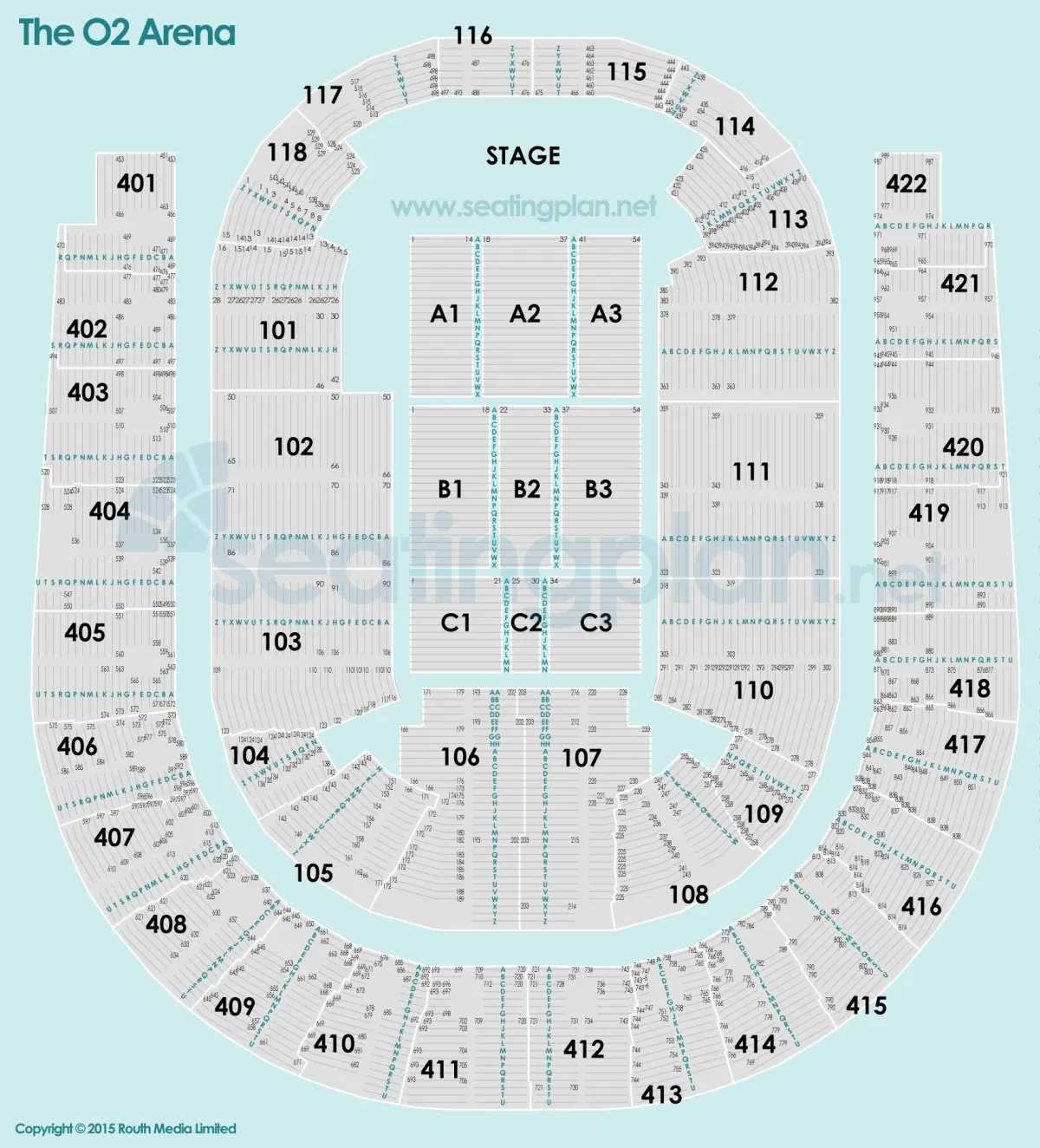 Photo: O2 Arena, via www.seatingplan.net
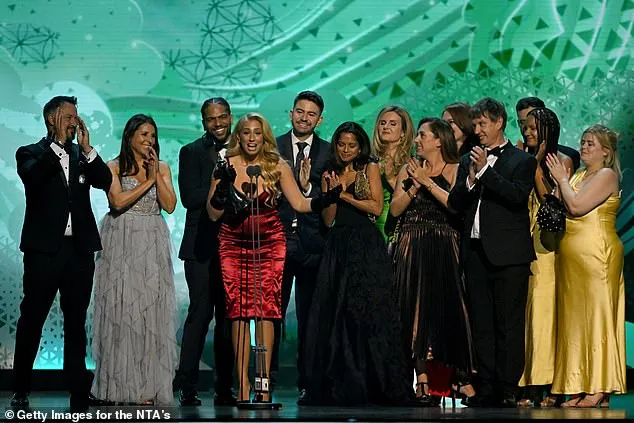 Photo: National Television Awards, via i.dailymail.co.uk
We're not talking about the winners crying. Crying is fine. Crying is expected. We're talking about the other moments: the dead air that stretches for approximately seven business days while a presenter stares at a teleprompter that has, in that instant, become completely blank. The mispronounced nominee names that echo around the O2 like a stone dropped into a very famous well. The envelopes — those cursed envelopes — that simply will not open.
Grab a cushion to hide behind. We're going in.
The Teleprompter Betrayal
Let us begin with the foundation stone of all NTA presenting disasters: the teleprompter that decides, at the precise worst moment, to become unhelpful. The NTAs operate at a pace and scale that would challenge even the most experienced live television presenter — a vast arena, a rowdy audience who have been in their seats since approximately 1987, and a running order that requires the kind of military precision that is, historically, not always achieved.
When the teleprompter fails — or more precisely, when the presenter's eyes find the teleprompter and their brain simply declines to process what it's reading — the result is a very particular kind of silence. Not a comfortable pause. Not a considered beat. A silence — the sort that fills the O2 Arena like water fills a glass, slowly, completely, inescapably.
The presenter smiles. The audience smiles back. The presenter looks at the autocue again. The autocue, unhelpfully, still says the same thing. The smile becomes somewhat fixed. Someone in the fourth row coughs. The show goes on, eventually, but something has shifted in the atmosphere of British television. Everyone felt it. Nobody mentions it.
The Mispronunciation Hall of Infamy
Nominating someone for a National Television Award is, one would assume, a straightforward honour. You've made excellent television. The British public has voted for you. A celebrity is going to stand at a podium in front of millions of viewers and say your name.
Unless they can't quite remember how it's pronounced.
The NTAs have produced a rich archive of presenter-nominee name disasters that range from the mildly mangled to the genuinely unrecognisable. There's the classic soft-pedal approach — beginning the name confidently and then sort of trailing off into a mumble that technically could be anyone. There's the bold mispronunciation delivered with such absolute conviction that the audience isn't sure whether the presenter is wrong or they've been saying it incorrectly for years. And then there's the very special moment where the presenter, mid-name, visibly realises they've got it wrong, briefly considers their options, and presses on regardless with the energy of someone who has already committed to the jump.
The nominees, watching from their tables, maintain expressions of serene, professional calm. This is the NTAs. This is live television. This is Britain.
The Envelope That Refused to Cooperate
The envelope is, in theory, a simple piece of stationery. It contains a card. The card contains a name. The presenter opens the envelope, reads the name, and the winner collects their award. A clean transaction.
In practice, the NTA envelope has, on multiple occasions, demonstrated a will of its own that borders on the supernatural. Envelopes that won't open. Envelopes that open sideways. Envelopes from which the card emerges facing entirely the wrong direction, requiring the presenter to perform a small, dignified rotation while approximately twelve million people watch.
One particularly legendary NTA moment involved a presenter — perfectly charming, absolutely prepared — who opened the envelope with complete confidence, looked at the card, looked at the audience, looked at the card again, and then delivered the winner's name with the specific intonation of someone who has just realised they may have misread it but is absolutely not going to stop now. The winner, to their eternal credit, stood up immediately. The applause was enthusiastic. Everyone moved on. The clip lived on the internet forever.
The Dead Air That Ate the O2
Perhaps the purest expression of NTA presenting chaos is the dead air moment — those stretches of complete, unadorned silence that occur when the segue between segments simply doesn't happen as planned. A presenter walks to their mark. The music fades. The audience looks at the stage. The presenter looks at the audience. The stage manager, somewhere in the wings, is having a very intense moment.
British audiences are magnificent in these situations. There's a collective, unspoken decision to be supportive — a gentle, encouraging energy that radiates from twelve thousand people simultaneously thinking come on, you've got this, we're rooting for you, please say something. The applause that eventually breaks the silence is always slightly too enthusiastic, the laughter slightly too warm. We're a kind people, really. We just want everyone to get through the evening.
The Accidental Double Announcement
A special category must be reserved for the occasions on which, through some combination of miscommunication, nerves, and the fundamental chaos of live events, a presenter announces the wrong winner — or announces the right winner in a way that briefly suggests the wrong winner. The scramble to correct course, conducted in real time in front of millions, is television in its most raw and unmediated form.
The winner who has half-risen from their seat, whose face is already arranging itself into a gracious acceptance expression, and who must then gently return to their chair — that person deserves a separate award. For composure. For dignity. For not, at any point, making it weird.
Why We Absolutely Love Every Second of It
Here's the thing about NTA presenting disasters: they are, genuinely, part of what makes the ceremony such essential viewing. The BAFTAs are polished. The Brits are produced within an inch of their life. But the NTAs — voted for by the public, beloved by the public, watched by the public with a cup of tea and a biscuit — have always had the quality of a very grand, very chaotic school play. Anything can happen. Often, it does.
The presenters who've stumbled through an autocue failure or wrestled with a recalcitrant envelope are not lesser for it. They are, in many ways, the realest thing on television that evening — a reminder that live TV is genuinely live, that famous people are genuinely human, and that Britain's relationship with its own telly is one of the most enduring and peculiar love affairs in the world.
We watch. We cringe. We clap. We talk about it for years.
That's the NTAs. That's why we're obsessed.