Totally Slay, Babes? The British Celebs Who Tried to Break the Internet and Just... Broke
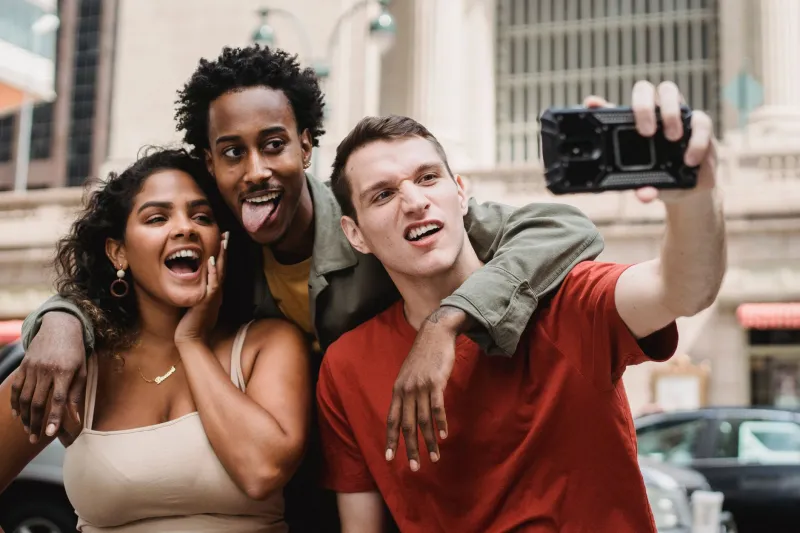
The internet is a young person's game. Everyone knows this. The algorithm knows this. The teenagers who make TikToks in their bedrooms and accidentally accumulate eight million followers know this. And yet — with a regularity that suggests some kind of collective amnesia — Britain's most established celebrities keep attempting to conquer digital culture with the energy of a dad at a school disco. The results are, without exception, extraordinary.
Welcome to the cringe chronicles. Buckle up. It's going to be a deeply uncomfortable journey.
When Slang Goes Wrong (And It Always Goes Wrong)
Let us begin with language, because nothing dates a celebrity's social media post faster than a misapplied piece of slang. The gap between slang being current and slang being embarrassing is approximately three months. The gap between a celebrity learning a piece of slang and using it publicly is, on average, six months. The maths is not in their favour.
A very famous British chat show host — beloved, genuinely funny, absolutely no business using the word "slay" in a caption about a new sofa — posted a promotional image last year that contained no fewer than four pieces of youth slang, used in succession, with the confidence of someone who had been assured by a twenty-two-year-old assistant that this was fine. It was not fine. The comments section was a masterclass in polite British horror. "Babe, no," wrote one user. "Who hurt you," wrote another. The post remains live, which is either brave or an oversight.
The golden rule is simple: if you had to Google it to use it, do not use it.
The TikTok Attempt That Launched a Thousand Memes
TikTok is a platform that rewards authenticity, timing, and a willingness to look genuinely silly in a way that feels deliberate rather than accidental. This is a very specific skill set. It is not, it turns out, a skill set that all established celebrities possess.
A particularly notorious example involved a well-known British actress — BAFTA-nominated, critically respected, the sort of person you'd describe as "formidable" — attempting a trending dance challenge in what appeared to be her kitchen. The video was clearly filmed in one take, with no rehearsal, and with the energy of someone who had been double-dared by their children. The timing was off. The moves were interpreted rather than executed. At one point, she appeared to knock something off the counter and just... keep going. The caption read: "Giving it a go!! 😂"
The internet's response was immediate and, crucially, warm rather than cruel. Because here's the thing — she wasn't pretending to be good at it. She was just having a go. And that, unexpectedly, is what made it work. The video has 2.3 million views. She has since posted three more. None of them are better. All of them are wonderful.
The "Relatable" Post That Was Anything But
There is a specific genre of celebrity social media content that attempts relatability but accidentally reveals quite how far removed from ordinary life the poster actually is. These posts are treasures. We must protect and celebrate them.
A beloved British television personality — the kind who presents programmes about ordinary people doing ordinary things — posted a photograph of her "casual Sunday lunch" that contained, upon close examination: a professionally styled table setting, what appeared to be a £400 candle, a cheese board that would comfortably feed twelve people, and a view of a garden large enough to host a small music festival. The caption was: "Nothing beats a low-key Sunday, does it? 🙏"
The comments were magnificent. "Low-key where?" wrote one person. "That cheese board is not low-key, that cheese board is a statement," wrote another. A food blogger calculated the approximate retail cost of the visible food items and posted it as a reply. The number was not small. The presenter has not used the word "low-key" since.
The Hashtag Disaster
Hashtags are a minefield even for the digitally fluent. For the digitally aspirational — which is to say, the celebrity who has been told by their management that "engaging with trending topics" is important — they are essentially a live bomb with a very short fuse.
At some point during a major national news cycle — the kind that generates a lot of emotional online conversation — a very famous British pop star from the nineties attempted to join the discourse by posting a lengthy, earnest message of solidarity accompanied by approximately fourteen hashtags, at least four of which were either misspelled, already out of use, or accidentally referencing something completely unrelated. One of the hashtags was for a cleaning product.
The post was deleted within two hours but, as the internet has an elephantine memory and an enthusiastic screenshot culture, it lives on in perpetuity. The cleaning product brand, to their enormous credit, responded with a cheerful tweet acknowledging the accidental mention. Everyone else just quietly moved on. Except us. We never move on.
The Ones Who Actually Cracked It
In fairness — because we are a publication of integrity and nuance, not merely a chaos archive — there are British celebrities who have genuinely, brilliantly, mastered the art of social media without sacrificing their dignity or their credibility.
A certain British comedian, whose career spans several decades and who has absolutely no business being good at this, has built a second-wind following online purely through the power of extremely dry, extremely well-timed posts that feel entirely authentic to who he actually is. No slang. No dance challenges. Just very funny observations, posted with the irregular frequency of someone who doesn't particularly care about the algorithm. Which is, of course, exactly why the algorithm loves him.
Similarly, a beloved British actress known primarily for prestige drama has cultivated a following through the simple act of posting genuinely interesting things she finds interesting, with zero apparent concern for what is trending or what her demographic is supposed to want. She once posted a lengthy caption about a historical textile she'd seen in a museum. It got 400,000 likes. Authenticity remains, against all odds, the most viral thing of all.
The Lesson Nobody Seems to Be Learning
The pattern here is relentless and beautiful. Celebrity attempts to seem current. Celebrity misjudges current. Internet documents the misjudgement with tremendous thoroughness. Celebrity either doubles down, deletes, or — in the best possible outcome — leans into it with genuine self-awareness.
The stars who thrive online are not the ones who try hardest to seem relevant. They're the ones who are most clearly, most unguardedly themselves — even when "themselves" involves a chaotic kitchen TikTok with no discernible choreography.
So here's to the brave, the baffling, and the brilliantly misguided. Keep posting. We'll keep watching. And screenshotting. Obviously.