Mouths Moving, Music Missing: The Most Gloriously Obvious Lip-Sync Fails in British Live Music History
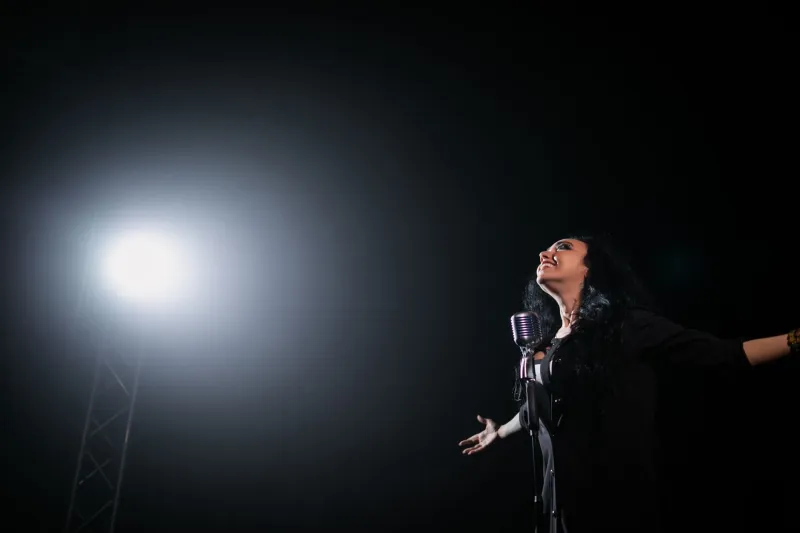
Let's establish something upfront: lip-syncing at live events is not, in itself, a crime. It is a pragmatic response to elaborate staging, pyrotechnics, the physical impossibility of singing whilst being hoisted forty feet above an arena floor in a sequinned bodysuit, and — let's be generous — the occasional bout of laryngitis. We understand. We extend our sympathies.
What we cannot extend sympathy for is being catastrophically obvious about it.
Britain has hosted some of the world's most prestigious live music events — the BRIT Awards, Radio 1's Big Weekend, Glastonbury, the Strictly Come Dancing final — and across these hallowed stages, certain performers have delivered lip-sync performances so spectacularly unconvincing that the ghost of their pre-recorded vocal track has essentially become a separate, more committed artist.
The Microphone That Told the Whole Story
The single most reliable indicator of a lip-sync situation — more reliable than a slightly-too-perfect vocal, more reliable than the suspicious absence of breath — is the rogue microphone. When a performer pulls the mic away from their mouth mid-high-note and the note continues uninterrupted, soaring through the arena with the confidence of someone who is absolutely, definitely still singing into the microphone, something has gone quite wrong.
This particular phenomenon has been witnessed at multiple BRIT Award ceremonies over the years, and the audience response is always the same: a brief collective blink, a glance at the person next to you, and the silent, mutual acknowledgement that you've both just witnessed something. You don't say it out loud. You just know.
Social media, of course, has removed all such social niceties. The moment is clipped, slowed down, zoomed in, and posted with a caption that typically reads something like 'EXPLAIN THIS' followed by several pointing-down emojis.
The Big Weekend Breezes In
Radio 1's Big Weekend is, by its very nature, a logistical challenge. Outdoor stage, variable weather, the constant threat of a Glastonbury-adjacent mud situation, and audiences who have queued since approximately the previous Thursday. Under these conditions, you might expect a little grace to be extended regarding the complexities of live performance.
And yet. When a British pop act — one who had built their entire brand on the idea of raw, authentic performance — took to the Big Weekend stage and delivered what could only be described as a masterclass in almost keeping up with themselves, grace was not the dominant response. The wind, which had thoughtfully carried the pre-recorded vocal perfectly, had also thoughtfully carried the performer's actual voice approximately four feet to the left, creating a brief but memorable stereo effect that nobody had requested.
The resulting Twitter thread — back when Twitter was still Twitter and people had the energy to be outraged about things like this — ran to several hundred replies, most of which were simply the word 'mate' followed by varying numbers of full stops.
Strictly Comes Unstuck
Now, the Strictly Come Dancing final is, at its heart, a dancing competition. The singing, when it happens, is primarily decorative. We are not here to be harsh. But when a celebrity guest performer arrives to provide the musical backdrop for the most watched Saturday night telly event of the year, there is a reasonable expectation that their involvement will be, at minimum, vaguely connected to the sounds coming out of the speakers.
Several Strictly finales have featured guest performers whose relationship with their own pre-recorded vocals could be described, at best, as 'interpretive.' One particularly memorable instance involved a performer who appeared to be mouthing the words to a slightly different version of the song than the one being played — possibly an earlier take, possibly a demo, possibly something recorded in a completely different key during a different decade. The professional dancers, to their enormous credit, kept dancing. The judges kept smiling. Bruce Forsyth (in his era) would have made a joke about it. Nobody made a joke about it.
The viewing public, naturally, made approximately forty-seven thousand jokes about it on the internet by the following morning.
The Tell-Tale Signs: A Handy Guide
For the uninitiated, here is a brief field guide to spotting a lip-sync situation at a British live event:
The Flawless Breath: Real singing involves breathing. If a performer has just sprinted across a stage the size of a small car park, executed a backflip, and is now delivering a sustained high note with the lung capacity of someone who has been sitting very still in a comfortable chair, something is afoot.
The Microphone Drift: As discussed. If the mic goes one way and the voice goes nowhere, you have your answer.
The Backing Track Bleed: Occasionally, the mix will be slightly off, and you can hear what is clearly a complete vocal — including the lead line — coming from the backing track while the performer's mic is live and producing a somewhat quieter, slightly breathier version of the same thing. This creates a haunting doubling effect that sound engineers describe as 'a nightmare' and audiences describe as 'hang on a minute.'
The Lyric Slip: Pre-recorded vocals don't forget the words. Human performers, especially nervous ones on enormous stages, occasionally do. When the voice is perfect and the mouth is slightly wrong, the gap between the two tells you everything.
Why Do They Keep Getting Caught?
This is, genuinely, the most fascinating question. The technology exists to make this seamless. The resources available to major label artists performing at premier UK events are considerable. And yet, with remarkable regularity, someone ends up on the front page of the Daily Mail website (sidebar of shame, naturally) with a screengrab and a circle drawn around their slightly-wrong mouth.
The answer, probably, is a combination of overconfidence, under-rehearsal, and the fundamental unpredictability of live events. It is very easy to perfect a lip-sync in a rehearsal room. It is considerably harder to maintain it when there are ten thousand people watching, the IEM earpiece is giving you feedback, and someone in the production team has accidentally loaded the wrong version of the track.
Also — and this is important — it is very hard to look natural doing something that is inherently unnatural. Real singing is physical. It involves the whole face, the neck, the shoulders, the entire body responding to the effort of producing sound. Miming, however well-executed, tends to involve a slightly fixed quality, a performance of singing rather than singing itself, and audiences — especially British audiences, who have been watching live music with forensic scepticism since approximately the dawn of Top of the Pops — are very, very good at spotting the difference.
The Receipts Are Forever
The cruelest thing about the modern lip-sync fail is its permanence. Pre-smartphone, these moments were witnessed, discussed, and eventually faded from collective memory. Now they live on YouTube, on TikTok, in slow-motion clip compilations with dramatic music added, forever. The microphone drift of 2019 is as accessible today as it was the night it happened.
Which is, depending on your perspective, either a cautionary tale or a gift. For those of us watching from the sofa with a glass of wine and absolutely no pyrotechnic obligations, it is very much the latter.